Breaking Barriers, Building Futures: Women in Leadership in Law (WILL) Convening in Nairobi

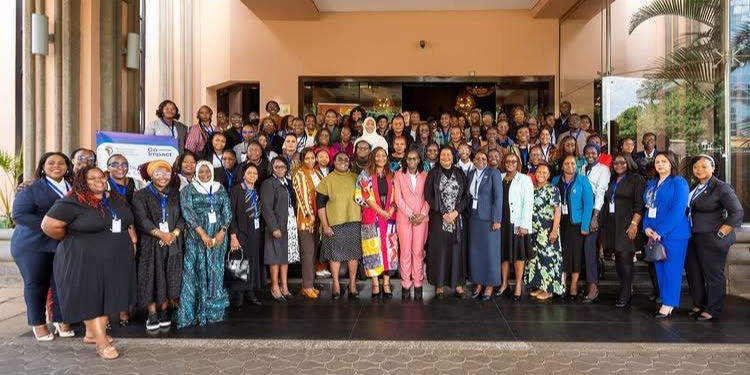
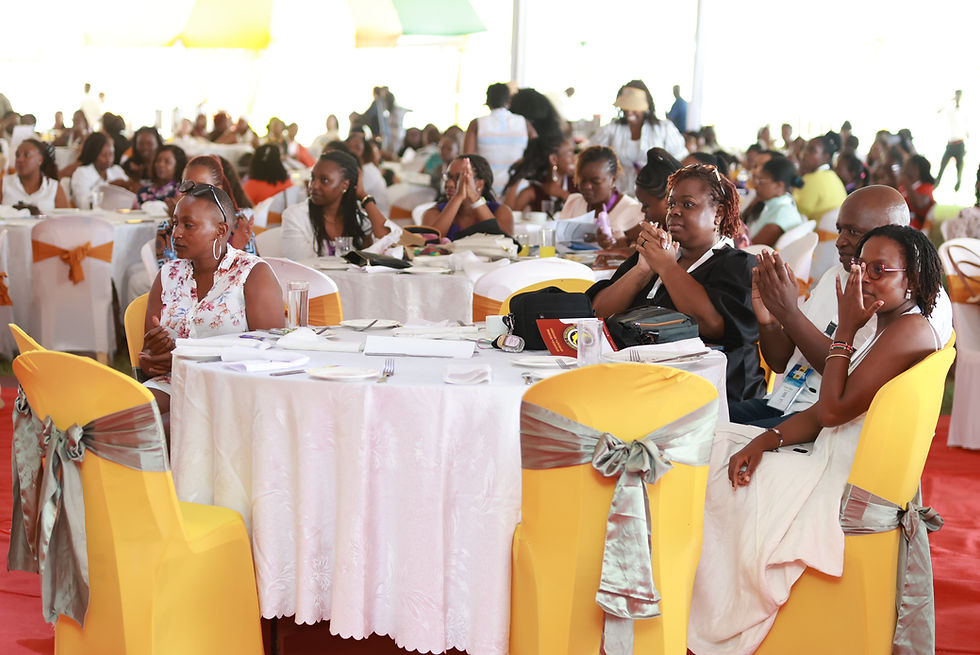
From 14th to 16th July 2025 in Nairobi, Kenya, the Pullman Nairobi Upper Hill Hotel became a hub of revolutionary energy, bringing together over 80 women, including judges, lawyers, activists, journalists and policymakers from across Africa and beyond. This landmark event hosted by FEMNET and supported by Co-Impact and other key partners, including IAWL marked a significant milestone in the decades-long struggle to shatter glass ceilings in courtrooms, boardrooms, and legislative chambers across the continent.
This landmark gathering builds on IAWL’s longstanding leadership in advancing gender equality in law. Through its Women’s Excellence in Law and Leadership Academy (WELLA), IAWL has equipped women legal professionals with transformative training rooted in ethics, innovation, and wellness. WELLA’s practice-based model and global faculty have inspired a new generation of African women lawyers to lead with purpose. Complementing this, IAWL’s Gender Equality in Law Campaign (GELC) has provided a policy framework for institutions to address gender bias, pay gaps, and promotion inequities, sparking reform dialogues across public and private sectors. Together, WELLA and GELC have laid the groundwork for convenings like WILL, which now echo across the continent as spaces of solidarity, strategy, and systemic change.
The convening's opening day set a powerful tone with its theme: "Celebrating Women's Leadership in Law: Experiences, Realities, and Voices of Support." The morning began with stirring welcome remarks from Memory Kachambwa, FEMNET's Executive Director, who framed the gathering as both a celebration and a call to action. This sentiment was echoed by Anne W. Ireri of FIDA Kenya, who reminded attendees that their presence honored generations of trailblazers who fought to create space for women in the legal profession.
Wandia Wanjiru, Regional Director for Africa at Co-Impact, issued a clarion call to dismantle the invisible architectures of exclusion in law and leadership. She asserted that true change requires changing policies, cultures, and practices simultaneously, the triple sediment choking women's ascent to leadership.
The three-day convening themed “Celebrating Women’s Leadership in Law: Experiences, Realities, and Voices of Support” brought together legal professionals, advocates, and change-makers for a powerful dialogue on gender equality and transformative leadership in Africa's legal sphere. Opening remarks from Memory Kachambwa, FEMNET’s Executive Director, framed the event as both a celebration and a call to action. Anne W. Ireri of FIDA Kenya emphasized honoring the legacy of women pioneers in law, while Wandia Wanjiru of Co-Impact challenged attendees to dismantle the entrenched cultural and institutional barriers hindering women’s ascent to leadership.
Faith Odhiambo, President of the Law Society of Kenya, delivered an impactful address centering justice as an inclusive and intergenerational journey. She called for courageous conversations across genders and generations and emphasized the need to challenge unconscious bias and cultivate male allies in the fight for legal equity. Justice Njoki Ndungu of Kenya's Supreme Court underscored the need for institutional reform, highlighting steps taken by the judiciary to address gender imbalances, including sexual harassment policies and mentorship programs. Both leaders emphasized intergenerational solidarity as key to nurturing future legal trailblazers.
A standout panel titled “Who Made the Ceiling Anyway?” spotlighted powerful stories of African women lawyers who have shattered professional barriers. Moderated by Henrietta Ekefre, the session featured Millie Odhiambo urging women to claim space boldly, and Coca-Cola’s Diana Kaeni reframing leadership as a process of reclaiming pre-colonial systems that empowered African women. The importance of mentorship arose repeatedly, not simply as guidance but as active sponsorship. Participants affirmed that access, not just encouragement is crucial for professional growth.
Day two, themed “From Insight to Impact: Using Data to Drive Gender Equality in Legal Leadership,” focused on concrete strategies for systemic change. Dr. Mercy Deche of the University of Nairobi presented a study revealing stark disparities in women's representation across Kenya’s legal sector. The panel discussion that followed drew insights from medicine, law, and advocacy, with Botswana’s Mona-Lisa Mungure and Kenya’s Elizabeth Wala linking gender gaps across professions. Advocate Khemraj, a male ally, highlighted IAWL’s work in transforming legal institutions through intentional male allyship.
An emotional high came during the “Pair & Share” exercise, where seasoned lawyers and young advocates exchanged personal stories of influence and growth, leading to honest conversations about intergenerational dynamics. Day three’s session, “Motion Granted: Bold Voices, Bold Demands,” featured AU Special Rapporteur Janet Sallah-Njie, who affirmed the importance of regional human rights mechanisms in amplifying national advocacy efforts.
Partner organizations such as the Clooney Foundation for Justice, Global 5050, GQUAL, Asia Justice Coalition, and others shared their global strategies for solidarity and reform, reinforcing the convening’s collaborative spirit. The event concluded with commitments: launching mentorship programs, initiating judicial reform collaborations, and creating a WILL task force to monitor progress. The energy that filled the room affirmed that Nairobi was not just a venue, but a launching pad for real, continent-wide change.
Final Thought
When women lead, justice is served. And this convening proved that the future of law is not just inclusive, it’s unstoppable. In a legal landscape still shaped by patriarchal legacies, the WILL Convening marked both a culmination of IAWL's decade-long work and a bold step toward futures where women's leadership in law isn't exceptional, but expected. Its true measure will be seen in courtrooms where more women preside, in firms where women’s leadership increases, and become equitable, in political leadership and in legislatures where laws finally reflect the full dignity of all Africans. If the energy in Nairobi was any indication, that future may arrive sooner than traditional power structures anticipate.